

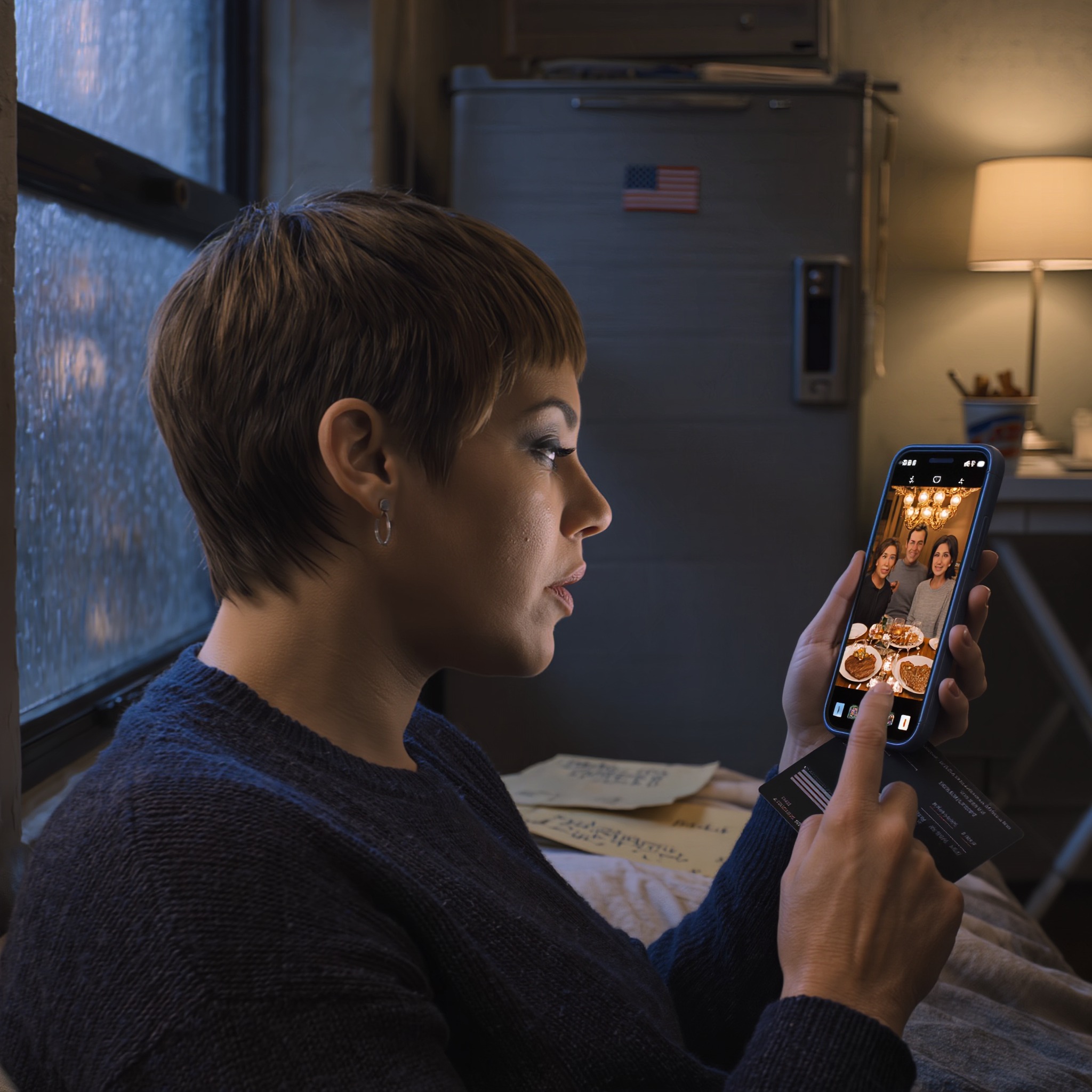
“That’s generous of them,” I said slowly.
“Totally. Plus, I’m taking a few months off work to plan. Wedding planning is basically a full-time job,” she said, laughing. “Mom said I should stay with them, save on rent.”
Let me get this straight.
My parents were broke—behind on everything—couldn’t afford Dad’s dental work… but they had a wedding fund.
And Sienna, college-dropout Sienna, was living with them rent-free while planning.
“You’re still working, right?” I asked.
“Oh, I quit last month,” she said, shrugging. “Trevor makes enough for both of us once we’re married. So… why stress?”
The math wasn’t mathing. The logic wasn’t logicing.
“Sounds perfect,” I said.
“Hey,” she said brightly, “you’re coming, right? I know money’s tight for you.”
She actually said that. Actually had the audacity.
“But you can’t miss your only sister’s wedding.”
“Wouldn’t miss it,” I said.
After we hung up, I sat in my dark studio for an hour. Outside, I could hear neighbors laughing, music playing, life happening.
I pulled out my calculator and did math I’d been avoiding.
$288,000 over eight years.
Where did it all go?
Something felt wrong, but I pushed it down. I was good at pushing things down.
Friday evening, I was at my desk finishing a client portfolio analysis. The office was quiet, just me and the hum of fluorescent lights.
My phone buzzed.
Family group chat.
A photo from Sienna.
The image loaded.
Mom, Dad, Sienna—at a restaurant.
Not just any restaurant. I recognized the interior immediately.
Oriel. The Michelin-starred place downtown where reservations book three months out and entrées start at $75.
Caption: Mom’s 60th at Oriel. Best meal of my life.
Champagne glasses. Gold-rimmed plates. What looked like a 30-year scotch in Dad’s hand. Everyone dressed like they’d stepped out of a catalog.
I zoomed in, studied the table, the details, and then I saw it.
Background slightly out of focus.
A receipt folder on the table edge. Black leather, cracked open. Inside, a white slip of paper.
I zoomed more. Enhanced.
The camera phone quality wasn’t great, but there was the credit card—just the top portion visible.
The name.
My name.
My heart stopped.
I zoomed again, fingers shaking now, enhanced until the pixels blurred.
Mila J. Parker.
Not Richard. Not Linda.
My name on their credit card at their dinner—one I never authorized, never opened, never knew existed.
I couldn’t breathe.
I opened my credit monitoring app. The one I recommended to every client. The one I checked obsessively because I’d seen too many fraud cases.
Alert. New activity.
Oriel restaurant. Portland, OR — $1,847.32.
I scrolled back.
More alerts I’d somehow missed or dismissed.
Nordstrom — $2,341.89.
Last week: Serenity Spa — $890.
Ten days ago: Premier Wine Merchants — $654.
Two weeks ago: account name Discover Card ending in 4472.
Cardholder: Mila J. Parker.
Credit limit: $45,000.
Current balance: $43,278.89.
I’d never opened a Discover card. Never applied. Never authorized.
I pulled up my full credit report—professional access, instant.
And there it was.
Not one card.
Four.
Discover: $43,127.
Visa: $67,234.
Mastercard: $38,091.
American Express: $89,200.
Plus a personal loan I’d never signed for: $89,000.
Total: $437,554.
$437,554 of debt I didn’t create.
The office tilted. I gripped the desk.
James walked past, stopped.
“Mila, you okay? You look like you saw a ghost.”
I couldn’t speak. I just stared at the screen.
“That’s my name,” I finally whispered. “That’s my credit card—and I never opened it.”
I stayed at the office until two in the morning. James brought coffee, sat with me while I pulled every document.
The first Discover card opened six years ago. Applications required a handwritten authorization, a Social Security number, an address. I requested copies from the bank. The writing looked like mine, but I’d never done it.
Visa: seven years ago, same story. Mastercard: four years. American Express: five.
Each one showed payment history. Minimum payments made monthly. On time, keeping the accounts in good standing.
Paid from where?
I cross-referenced with my bank transfers.
There.
Every month, $3,000 went to my parents’ account. And from that account, minimum payments flowed back out to these fraudulent cards.
They were using my money to pay the minimums on debt they’d created in my name.
Circular fraud. Self-sustaining.
Brilliant in the most horrifying way.
“This is over seven years,” James said, scanning the timeline. “This isn’t an accident. This is systematic.”
The charges told a story.
Restaurants I couldn’t afford. Nordstrom. Bloomingdale’s. Delta First Class tickets to Hawaii. Four Seasons Resort. Tiffany jewelry. Premium wine subscriptions.
While I ate ramen.
While I worked weekends.
While I turned down promotions and relationships and every single chance at a life.