
“It is,” I said. “I didn’t think she’d stick with it.”
“What changed?”
“Therapy,” I said. “I think she’s been working on her insecurity. And I think Daniel finally stepped up—started advocating for me instead of just managing me.”
“Are you happy?”
“I’m cautiously optimistic. The pattern is broken, but I’m still watching.”
“Will you always be watching?”
“Probably,” I said. “Trust is hard to rebuild once it’s broken. But I’m willing to try.”
One year after the birthday dinner that started everything, Daniel’s 39th birthday arrived. The group text started three weeks in advance.
Amanda: “Daniel’s birthday is coming up. Should we do dinner again? Different restaurant this time.”
Patricia: “I’d love that.”
Lauren: “I’m in.”
Me: “Count me in.”
Amanda: “Perfect. I’ll make a reservation. Let me count: Daniel, me, Sophia, Mom, Dad, Lauren, Mark, and Catherine. That’s eight.”
She’d counted me first this time—well, last, but she’d counted me.
Amanda: “Reservation made for eight people. Friday at 7:00 p.m. Looking forward to it.”
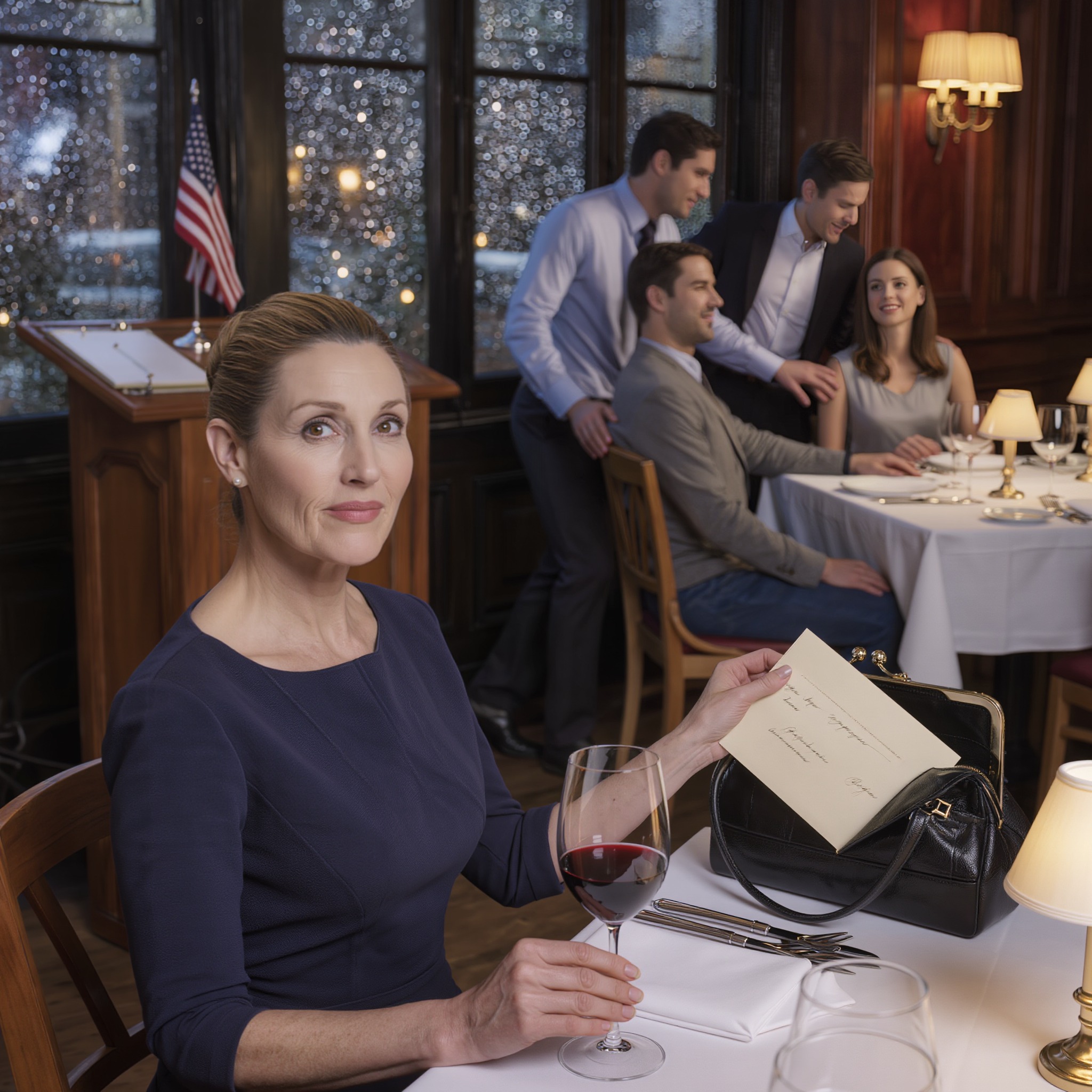
Friday arrived. I went to the restaurant. The hostess led me to the table. Eight place settings, eight people, including me.
My place setting had a small wrapped gift at it.
I looked at the tag. From Amanda.
I looked up. Amanda was watching me.
“I wanted to acknowledge what happened last year,” she said softly. “And thank you for not giving up on us.”
I opened the small box. Inside was a silver bracelet with a charm—a family tree with small stones. Each stone had an initial: D for Daniel, A for Amanda, S for Sophia, and C for Catherine.
“You’re part of our family tree,” Amanda said quietly. “I’m sorry it took me so long to show you that.”
I looked at the bracelet, at the family tree, at the C among the others.
“Thank you,” I said. “This means a lot.”
Dinner that night was easy, comfortable—the way family dinners should be. We laughed, told stories, made jokes, celebrated Daniel. And when I looked around the table—at Daniel, at Amanda, at Sophia, at Patricia and Richard, at Lauren and Mark—I realized something.
I belonged here. Not because I’d begged for it. Not because I’d made myself smaller. But because I’d stood up for myself, documented the exclusion, called it out, required changed behavior, and they’d risen to meet that requirement.
One year after that birthday dinner, I had coffee with Margaret.
“How are things with the family?” she asked.
“Good,” I said. “Really good. No more exclusions.”
“Regular Sophia time?”
“Every other Saturday,” I said. “Invited to all events. Treated like actual family.”
“That’s wonderful. I’m proud of you for standing up for yourself.”
“It was hard,” I admitted. “There were moments when I thought about just accepting it—accepting being excluded to keep the peace.”
“What stopped you?”
I stared into my coffee for a moment. “I realized the peace I’d be keeping wasn’t real peace. It was just me being quiet about being hurt. That’s not peace. That’s suppression.”
“What did you learn from all this?”
I thought about it. “I learned that sometimes the most loving thing you can do for a relationship is require it to be healthy. That means boundaries. That means calling out bad behavior. That means not accepting excuses for things that hurt you, even if it makes things uncomfortable—especially if it makes things uncomfortable. Because uncomfortable honesty is better than comfortable pretense.”
“You sound like you’ve been thinking about this a lot.”
“I have,” I said. “For a long time I thought being a good mother meant being accommodating—accepting whatever scraps of relationship my son and his wife were willing to give me. Not making waves.”
“But you changed your mind.”
“I realized being a good mother also means modeling self-respect,” I said. “Sophia is watching. She’s watching how I let people treat me. And I want her to see that it’s okay to stand up for yourself. That it’s okay to require respect. That being family doesn’t mean accepting mistreatment.”
Margaret smiled. “You’re a good grandmother.”
“I’m trying to be.”
We sat in comfortable silence for a moment.
“What about the spreadsheet?” Margaret asked. “Do you still keep it?”