
“Maybe,” I said. “Someday. If the pattern of inclusion continues long enough. Trust takes time to rebuild, and I’m okay with taking that time.”
Two years after the birthday dinner incident, I sat in Daniel and Amanda’s backyard at Sophia’s seventh birthday party. The yard was full of children running and laughing, parents chatting, balloons and streamers everywhere. And me—sitting at a table with a place card that read: “Grandma Catherine.” Not shoved at the edge. Not forgotten. Right there at the family table.
Sophia ran over, face painted like a butterfly, holding a paper plate with birthday cake.
“Grandma, did you see my butterfly face?”
“I did,” I said. “It’s beautiful.”
“Will you help me with the piñata?”
“Of course, sweetheart.”
She ran off to join her friends.
Amanda sat down beside me. “Thank you for being here.”
“Where else would I be?”
“I mean it,” she said. “Thank you for not giving up on us. On me.”
“You did the work, Amanda,” I said. “You faced your issues. You changed your behavior. That’s not easy.”
“It wasn’t,” she admitted. “But it was worth it.”
We watched Sophia play with her friends.
“Can I tell you something?” Amanda asked.
“Of course.”
“Last week, my mother and I had a really honest conversation,” she said. “About how she raised me, about the criticism, about how I’ve been walking on eggshells my whole life trying not to disappoint her.”
“How did that go?”
“Hard,” Amanda said, “but good. She didn’t realize how her words affected me, and I didn’t realize I’d been letting that affect how I treated other people—including you.”
“That’s progress.”
“She apologized,” Amanda said softly. “Really apologized. And she said she wants to work on our relationship too.”
“I’m glad.”
“I told her what my therapist said,” Amanda continued. “That hurt people hurt people. That I’d been so hurt by her criticism that I started seeing criticism everywhere, even where it didn’t exist. And that I hurt you because of it.”
“What did she say?”
“She cried,” Amanda said. “Said she was sorry. Said she’d been hurt by her mother too. And she just passed it down without realizing it.”
“Generational trauma,” I said.
“Yes,” Amanda said, watching Sophia. “But we’re going to break the cycle—for Sophia’s sake. She’s going to grow up in a family where people communicate honestly, where people include each other, where people face their issues instead of letting them fester.”
I looked at Sophia, laughing with her friends, face painted completely carefree. “She’s lucky to have you as a mother.”
Amanda swallowed. “We’re all lucky to have you as part of this family.”
Daniel walked over carrying a tray of drinks.
“What are you two talking about so seriously?” he asked.
“Just about how far we’ve come,” Amanda said.
“Long way,” Daniel agreed. He set the tray down and sat with us. “Mom, I want to say something.”
“Okay.”
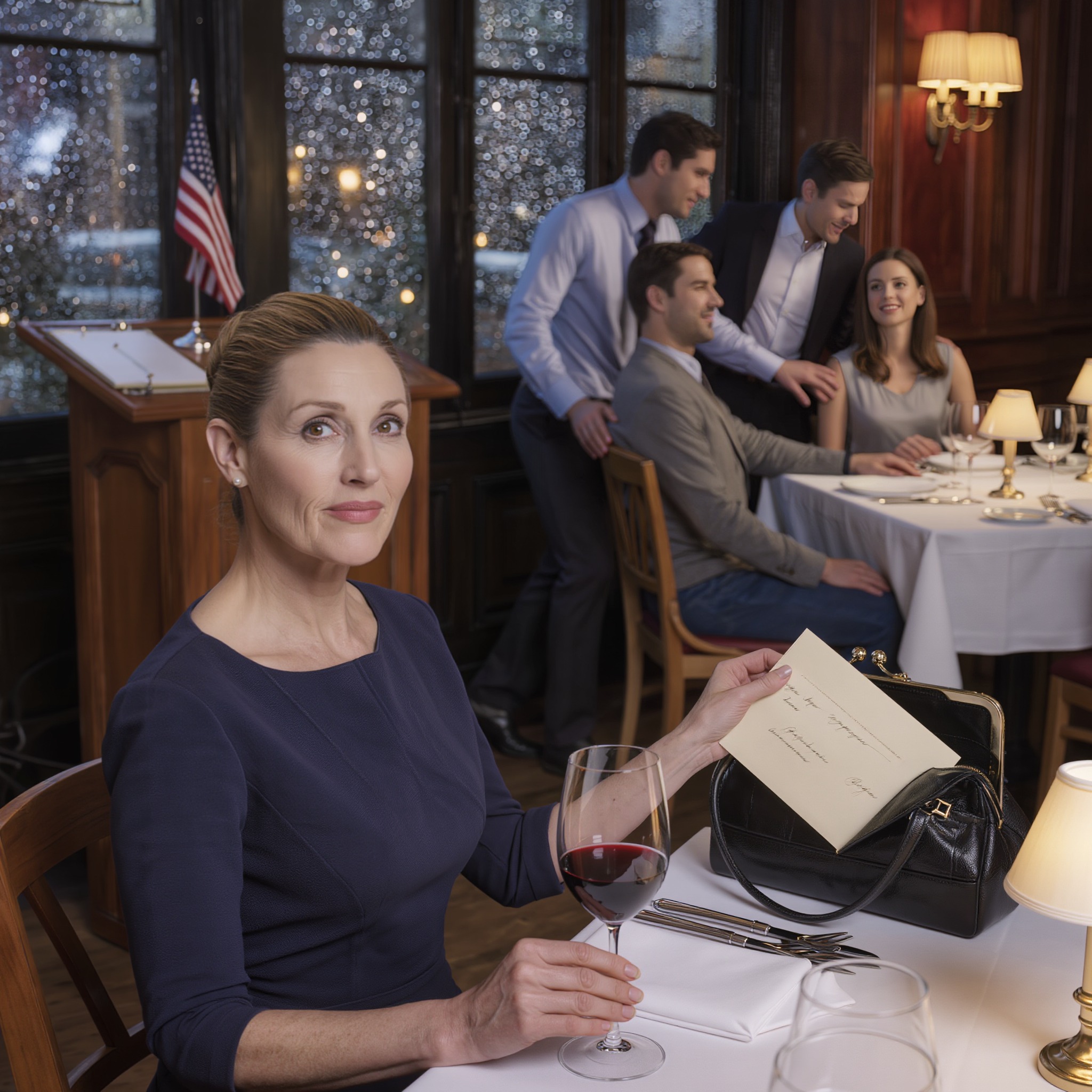
“Two years ago at my birthday dinner,” he said, “you stood at that table with no place for you. And you could have made a scene. You could have yelled. You could have walked out and never spoken to us again.”
“I thought about it,” I admitted.
“But instead you handled it with dignity,” he said. “You got your own table. You ate your dinner. You gave me my gift. And then you went home and documented everything.”
“The spreadsheet,” Amanda said quietly.
“The spreadsheet that changed everything,” Daniel said, “because it made us face what we were doing. It made it undeniable.”
“I needed proof for myself as much as for you,” I said.
“And then you gave us a chance to do better,” Daniel said. “That’s what I’m most grateful for. That you didn’t write us off. That you believed we could change.”
“I believed you could change,” I said. “I wasn’t sure you would, but I gave you the opportunity.”
“We almost didn’t,” Amanda said softly. “There were moments in therapy when I wanted to quit. When I wanted to say, ‘This is too hard. Catherine is too demanding. She needs to get over it.’”